
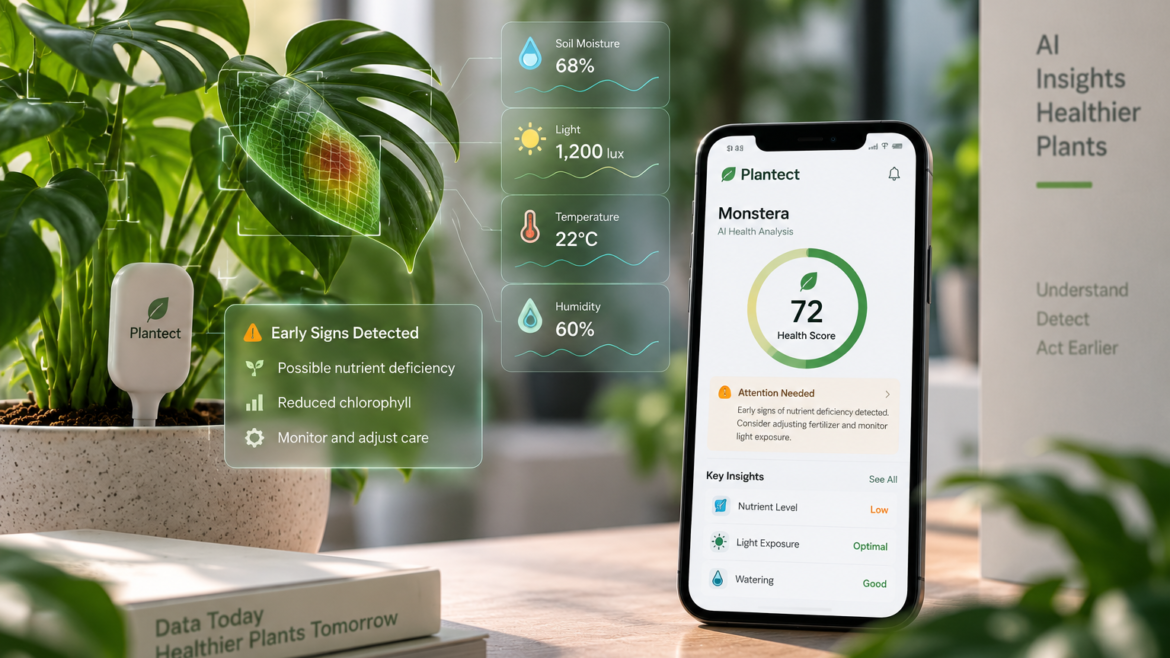
Plantect’s AI Health Engine is designed to help users identify plant health risks before they become visible. Instead of depending only on fixed threshold alerts or late visual symptoms, the system analyzes live environmental readings, historical trends, plant profiles, and changing growing conditions to recognize early patterns of stress. This allows users to understand when moisture, light, temperature, humidity, or nutrient-related changes may begin affecting plant health, even before the issue becomes obvious through the leaves, soil, or overall plant appearance.
The engine transforms raw sensor data into practical plant health intelligence. By comparing current readings with expected conditions for each plant type or growing zone, Plantect can highlight potential risks such as drying trends, sustained light stress, unstable temperature patterns, or conditions that may lead to pest or nutrient problems. This supports a more proactive care routine, helping home growers, greenhouse operators, landscapers, and municipal teams act earlier and avoid unnecessary plant loss, wasted resources, or emergency maintenance.
As the platform develops, the AI Health Engine will become one of Plantect’s central differentiators. The BP explains that Plantect’s machine learning models are planned to analyze historical trends, species-specific baselines, and current conditions to detect early indicators of watering imbalance, nutrient deficiency, or pest risk before symptoms become visible